The new Salvador Dali Museum of St. Petersburg Florida - Nikon D300 with Tamron 17-50mm f/2.8 @ f/11 ISO 200 7-bracket HDR with partial blend of a single image on Induro CT214 tripod with cable releaseThe appearance of any new piece of architecture within a photographer's city is an opportunity to create a defining shot of it. I am far from the first local photographer to make photos of the new Salvador Dali Museum here in St. Petersburg, Florida, and even farther from producing the defining shot. Moris Moreno has already made those shots (view here). When I did a search to see what photos of the museum already existed, finding and viewing Moreno's shots were humbling.
I finally photographed the new Dali Museum mostly because a commercial client wanted a shot of it to use for cross promotional purposes. They required only a single shot which is the above. I then went back on another occasion to use the museum grounds as the site of a DSLR Photography Lesson and made a few more shots during that time.
The above shot represents the culmination of all my HDR shooting skills, plus my increasing use of masking. I will describe this editing technique in detail in an upcoming post. It also helps now that I am using a professional level tripod, an Induro CT214 with Induro BDH2 ballhead. Again, a review of those sticks will be coming soon.
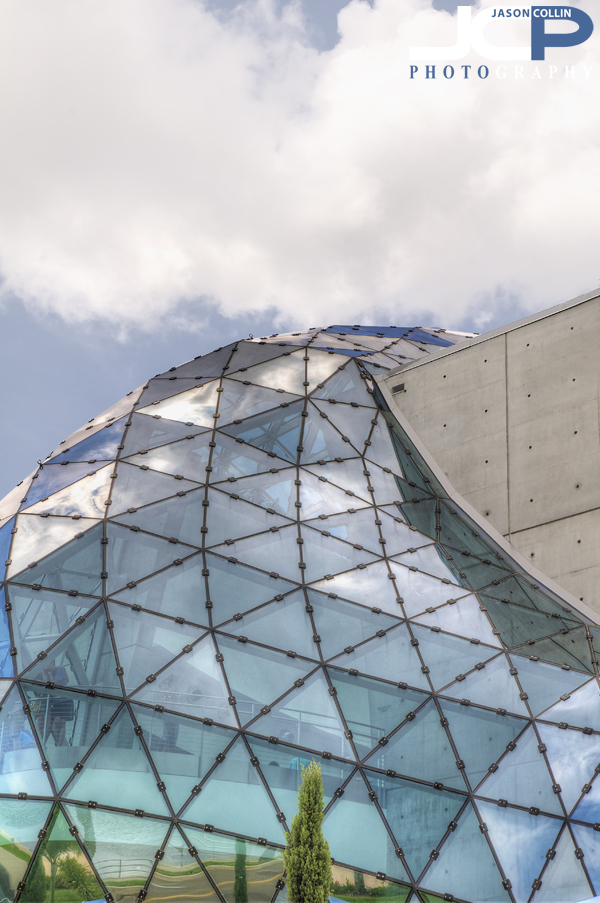 The glass waterfall of the new St. Petersburg Salvador Dali Museum - Nikon D300 with Tamron 17-50mm f/2.8 lens @ f/11 ISO 200 7-bracket HDR with partial blend of a singe image on Induro CT214 tripod with cable releaseThe main architectural flair of the museum exterior is a so-called waterfall of glass flowing narrowly from the east facing roof of the building to a wider flow along ground level wrapping around the north side. Using an HDR technique to photograph the triangular glass panels up close allows for being able to see inside the glass while keeping the sky correctly exposed.
 The Mahaffey Theater (right) has a new neighbor in the Salvador Dali Museum - Nikon D300 with Tamron 17-50mm f/2.8 @ f/11 ISO 200 1/250th 3-shot panorama on Induro CT214 tripod with cable releaseI always liked the Mahaffey Theater's glass architecture feature, and now it is complemented with the glass waterfall of the Dali Museum. The buildings are not exactly in a popular area of downtown St. Petersburg, more on the outskirts of it. The only times I passed this area in the past were on exploratory cycling trips. The roads are wide, smooth and empty in this area, great for cycling.
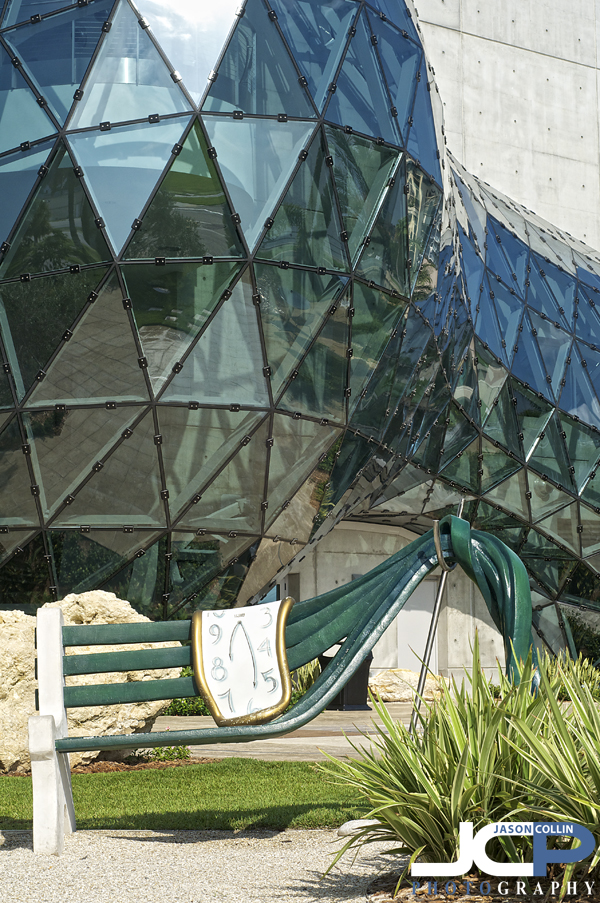 Melting Time bench at new Salvador Dali Museum St. Petersburg Florida - Nikon D300 with Nikkor 50mm f/1.8D lens @ f/11 ISO 200 1/400th single frame handheldThe grounds of the museum before the glass waterfall contain a well landscaped garden inlcuding a melting time bench reminding one that they are still in the world of Dali. It is details like that, an extra expense no doubt, that add a lot to the visiting experience. I did not sit on the bench myself, for time already moves in strange ways for me. I did not want to risk any further altered perceptions.
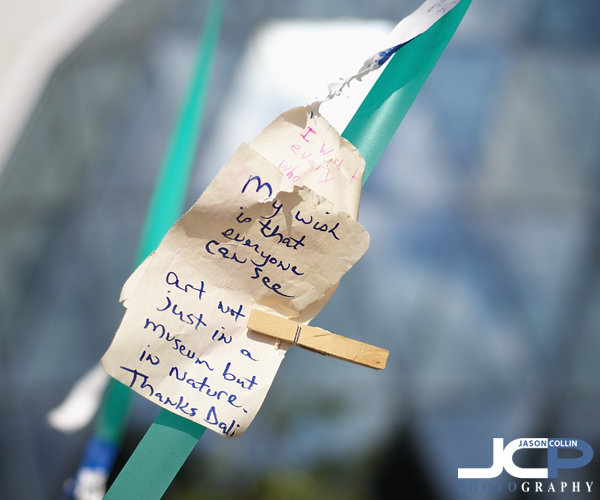 Handwritten note adorning a tree at the new Dali Museum in St. Petersburg Florida - Nikon D300 with Nikkor 50mm f/1.8D lens @ f/2.8 ISO 200 1/8000th single frame handheldAnother great feature of the Dali garden was a tree adorned with long green streamers to which people afixed handwritten notes with clothespins. Some just tied their entrance wristbands to the streamers. Whoever thought of this came up with a really great idea to give a visitor a sense of what other people experienced and felt on their visits. No matter how good digital communication gets, the power of the handwritten note/letter/document just cannot be denied. Penmanship is just as much a representation of a person's character as anything else. When I formally go to the museum as a visitor, I will take the time to add my own handwritten remembrence.

 Click to see 2500px wide version - Mahaffey Theater on the left St. Petersburg downtown center - image available for fine art print & commercial license, call today! 813-240-5357