Photography Tips

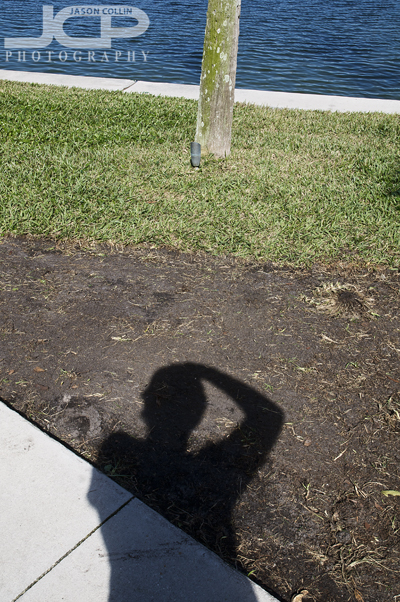
Photography Tip - point your shadow at the subject

Point your shadow at the subject to get the best exposure chance.Pointing your shadow at the subject is the photography tip I have given the most perhaps.  I have told it to every past photography student (300 and counting!).  The most common way to express this though is to say put your back to the sun to help get the best exposure when shooting outside on a sunny day.  I find it is even easier just to point your shadow at the subject.  For a subject you can move, then definitely place yourself between the subject and the sun so that your shadow is pointing at the subject and your back is to the sun.  Sometimes of course the subject cannot be moved so then you have to compromise or come back at a different time when the sun would be behind you.

For moving subjects I follow this same rule.  I will position myself as much as possible with my shadow pointing in the general area of the subject and wait for it to move in front of me.

Pointing your shadow at your subject will give you the best chance at getting a good exposure throughout the photo when shooting during the day.  It's a very simple way to dramatically improve your final image.  Let me know how it works for you.

Canon T3 1-on-1 DSLR Photography Lesson in St. Petersburg with Ken

Ken focuses his Canon T3 during our 1-on-1 DSLR Photography Lesson in downtown St. Petersburg FloridaMy 1-on-1 DSLR Photography Lesson with Ken was a long time in the making.  He first contacted me in November of last year, and at last his schedule freed up so we could meet in downtown St. Petersburg.  Ken had some familiarity with photography terms and he did read his Canon DSLR manual.  We began the lesson by going over in detail how to change the necessary settings on his specific Canon T3 camera body for shooting in manul mode.  Up until then, Ken had been shooting in auto-mode.  My introductory 2-hour lessons are designed so that the person never has to use auto mode again and can shoot in manual mode just like the pros do, and really how a DSLR wants to be used.

After having that in-depth tour of his DSLR, we practiced how to control DoF and make the background disappear and create a subject surrounded by bokeh (photography term for out of focus background).  We also covered a few shooting tips including favoring shooting flowers in shade rather than the harsh midday sunlight of Florida, and as much as possible when shooting in direct sunlight, to get your back to the sun.

I look forward to seeing Ken's progress when we meet for our next photography lesson soon.

Nikon D7100 1-on-1 DSLR Photography Lesson in St. Petersburg Florida with Joe

Joe with his Nikon D7100 during our 1-on-1 photography lesson in St. Petersburg FloridaJoe was visiting Florida from out of state for a series of photography excursions with Rick Sammon.  Those were largely about having the chance to photograph unique subject matter like dirtbikes jumping in the air and running horses.  Still, I guess I should feel flattered to follow up photography instruction by Rick with my own 1-on-1 style lesson!  

What Rick wanted to learn from me was my (patented?) 5-step process for making a well exposed and sharp photo in any given shooting situation.  He was already shooting in manual mode, but wanted to get better at it.  I told him there is a very exact and repeatable process for shooting still subjects in manual mode.  Photography really is science and math, at least as far as getting exposure right.  There is no mystery to it.  The process I teach tells you exactly if this, then do that in a very specific order.  Now composition and making a final image that delights people, that is another matter for practice!

Joe and I plan to stay in contact once his Florida vacation is over for receiving feedback on his photographs he makes as he learns my 5-step process better.  

Photography Tip - use repeating patterns & shallow DoF composition

These are hanging lights in a dark restaurant. I just popped in and asked someone if I could make a quick photograph of them.I do not often give composition tips, nor get around to teaching them so often in my 1-on-1 DSLR photography lessons because I usually focus on the practical aspects of making a well exposed and sharp image in any given shooting conditions.  Once someone knows how to do that, then the creative aspect of photography can come into play, and that is something that can only be taught to a certain extent anyway.  Either you have talent composing a photograph, or you do not.

Of course there are some composition tips that can definitely help out, or if you find yourself using the same composition style over and over, reading a few new ideas can provide some new inspiration.  

These are hoops on a rack in an accessories shop. Same situation, I asked someone inside if I could take a few photos, and they said yes!The two example photos in this blog post show a combination of two composition techniques, the first is obviously shallow depth of focus (DoF) and the other is repeating patterns.  The latter is something I am always looking for when out in the field.  I am a big fan of including repeating patterns, the more creative and abstract the better, in photographs.  Shallow DoF can be used on any subject matter, but when combined with a repeating pattern I feel has an even greater visual impact. 

Photography Tip - go through all your DSLR menus and recheck settings

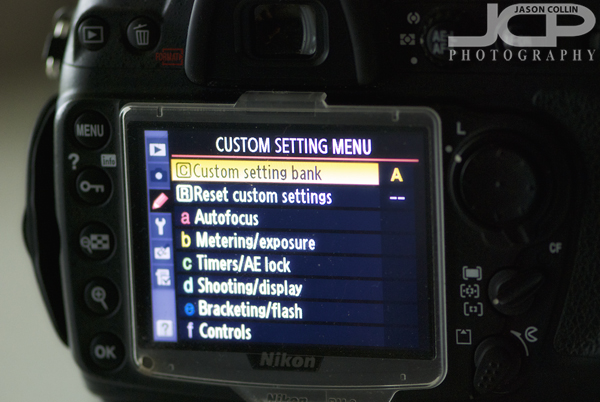
To start out the year, the first photography tip of 2014 is to go through each and everyone of your DSLR's menus and confirm that all the settings are what you want and to refresh your memory about where less often used settings are.  Deep in the menus are things that basically only ever need to be set once (like number of auto-focus points beyond a single point), but gremlins do exist and even though you may never remember changing any of these lesser used settings, they might have on their own somehow!  

Going through all the menus will also help you remember where things are that do occassionally need to be changed.  It's better to refresh you memory home at your desk than when out in the field already shooting.  

If you find something in your menus you are not sure of what to set at, or even what it does, leave a question in the comments and I will try and answer it for you.

Good luck shooting in 2014!

Nikon D3100 DSLR Photography Lesson in St. Petersburg Florida with Pat & Jon

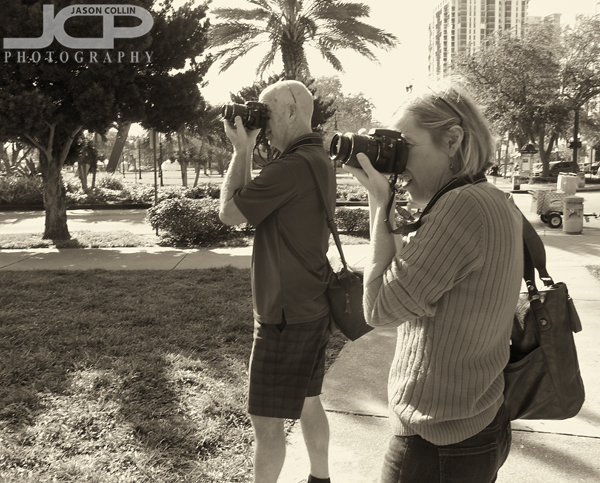
Pat & Jon showing good form with their Nikon DSLRs during our photography lesson in St. Petersburg FloridaIt is very rare for me to teach anything but a 1-on-1 DSLR Photography Lesson but in seven day's time when I met Pat and Jon it was my third that week!  Pat had experience with film SLRs, but found their Nikon D3100 DSLR to be a more complex camera body than she was used to.  Jon had been doing a lot of reading up on digital photography, so with their combined photography knowledge, they already had a good base to start from.  During our photography lesson I taught them my very specific and exact process for making a well exposed and sharp image in any shooting conditions.  Knowing what aperture is, and shutter speed, etc, is one thing, applying that knowledge is another and is the biggest reason why my on location, in the field shooting, photography lessons help get people actually shooting in manual mode as quickly as possible, and in a way they can repeat even after the lesson.

Pat & Jon have a business related to air shows, so being able to get shots of plans flying by is something they wanted to learn about.  Really for photographing any moving subject the technique is the same, it's just the size and speed of the subject may make things a little more tricky.  It's all a matter of using the minimum shutter speed necessary (1/500th) and the correct focus mode (AF-C; Ai-servo).  After that your technique as a photographer and skill to track the subject takes over.  

I look forward to seeing their future plane and jet photos using the skills we practiced during our photography lesson on a pleasant Saturday morning in downtown St. Petersburg, Florida.

Photography Tip - adjust highlights slider to recover detail

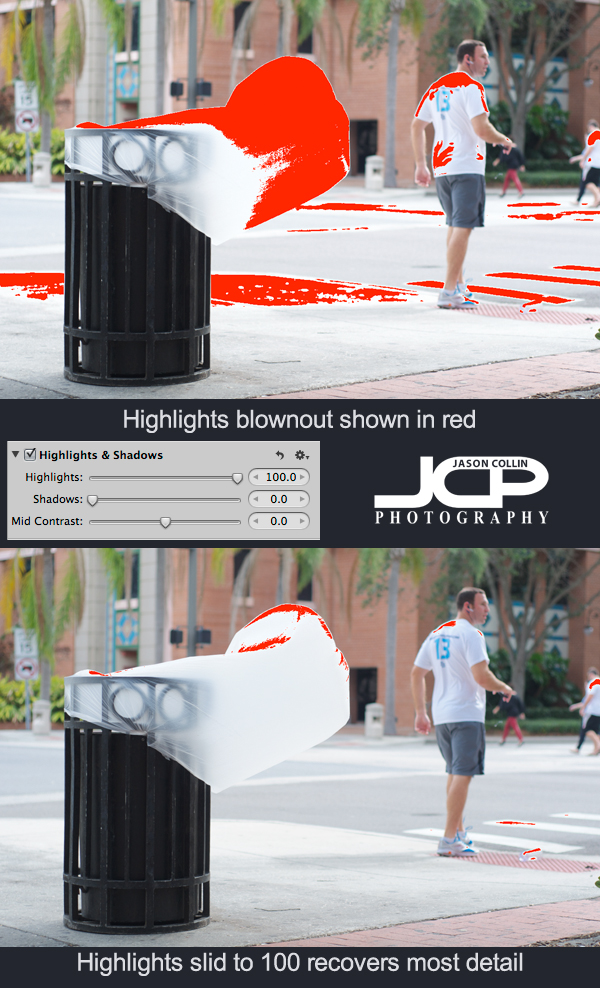
When shooting outdoors in the harsh Florida sun, it is not uncommon to blowout the highlights in a photograph, especially if there are any white colors in the shot or there are reflective surfaces.  In the above example you can see one thing that fascinates me about St. Petersburg - its trash cans.  On windy days when the trash cans are empty, the trash bag itself gets kind of turned inside out and blows out like a tongue.  These wave and thrash in the wind and it amuses me to see this phenomenon.  

In the shot, the trash bag is the lightest thing in the whole frame.  Most of the shot looks exposed correctly, but the white trash bag is catching a lot of light and that results in it looking blownout.  Using Aperture 3 I turned on the show Highlights/Shadows view which paints red over the parts of an image that are overexposed (blownout).  Sometimes detail can be recovered in blown highlights and it is very simple to do.  

---> Just use the Highlights slider to get back details 

In this case it had to go all the way to 100%, but usually less is needed.  In the second screenshot after the Highlights slider has been adjusted, there is much less red visible.

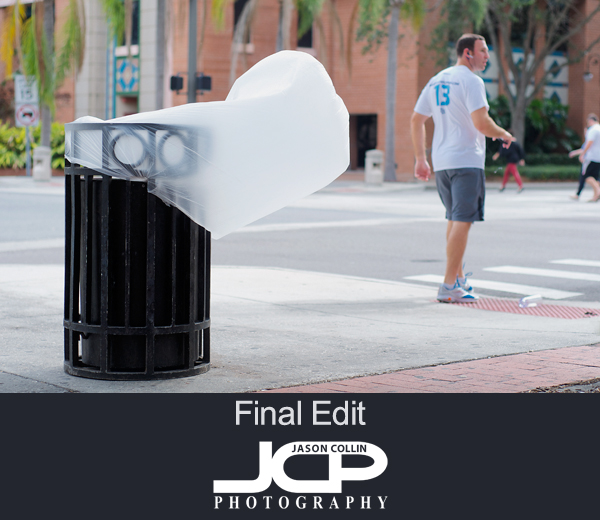
After doing all my usual editing to a photoggraph, the results allow the viewer to see the trash bag as more than just a pure white cylinder.  Try adjusting the Highlights slider when editing your photographs to recover as much details as possible, especially when shooting out in bright sunny conditions.