Photography Tip - set DSLR Drive Mode to its fastest for action shots

One big differentiator between DSLR models is how many frames per second it can shoot.  10 FPS is fast, 3 FPS is not.  6 FPS is a minimum for being able to produce pretty good action and sports photography shots.  The faster the FPS of your DSLR, the better the odds are for you to capture the best moment in an action sequence.  Knowledge of the action type definitely helps, but ultimately a lot of it comes down to just being lucky enough to have had your DSLR capture that particular frame that looks the best, the coolest, the most dynamic.  

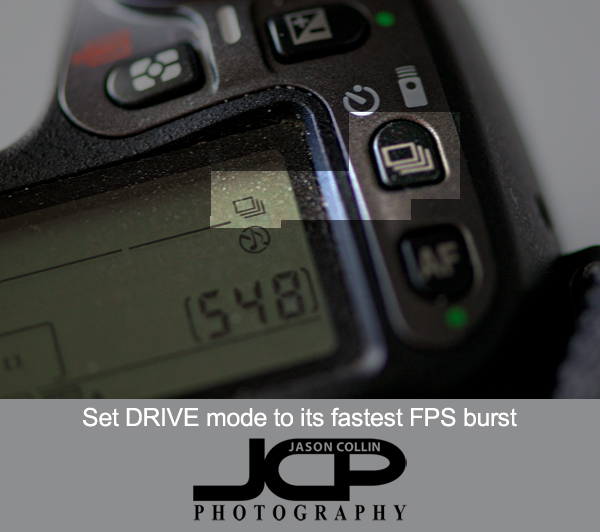
By default most DSLR will be set to take only a single shot no matter how long one holds the shutter down for.  For me, I always leave my Nikon in its faster FPS setting.  In the menus this is usually called the Drive Mode and its symbol looks like a stack of cards (see photo above).  Many DSLRs will have a button for changing this setting on the camera body.  My thinking for leaving it set to the fastest is you never know when something cool will happen and I much rather have 6 chances in a second of capturing it than one.  Of course I do not always hold the shutter down and take 6 FPS.  I have trained my finger to only actuate one shot each time I press the shutter if I only want to make one shot.  I have seen though that many newer model DSLRs have a very sensitive shutter button making this very hard to do.  Maybe those will eventually wear in and not be so sensitive.

If you find you are taking too many shots at once due to a sensitive shutter or other reasons, there is usually a second, less fast FPS setting you can use, without having to go to just a single shot setting.  When photographing the St. Anthony's Triathlon that was the drive mode I was recommended to use in order not to end up with too many shots of each triathlete.   
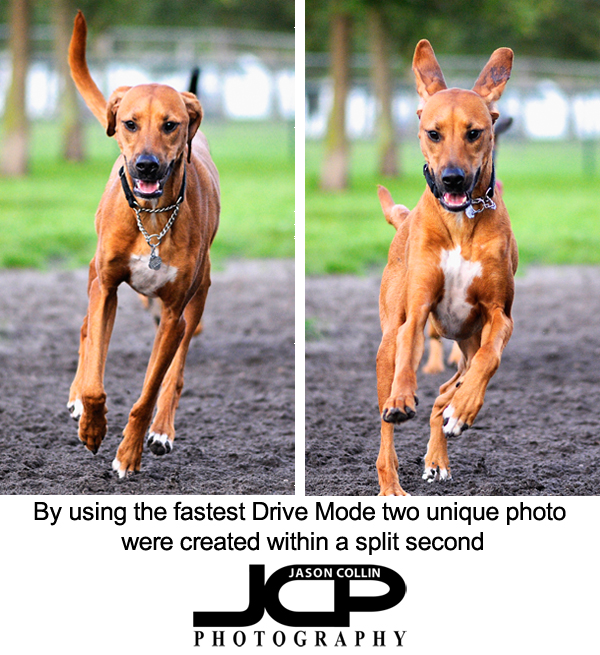
In the above dog photos these were made withing a split second of each other.  If I was trying to specifically get an ears up or ears down shot, I would never rely on having perfect timing to do it with one shot!  For sure I would use the fastest burst mode available.  This is definitely a case where you lock onto your subject and just hold the shutter down and hope the final frozen action of the subject looks good.  You use your skills to set exposure and focus, and to position yourself well relative the moving subject.  This minimizes how much you need to be lucky to capture good action shots.  Get your settings right, put yourself in good position, then hold the shutter down and hope you got just the right moment!  The faster your FPS, the better your chances.

PER Conference 2013 at Moffitt Cancer Center USF Tampa Florida Event Photography

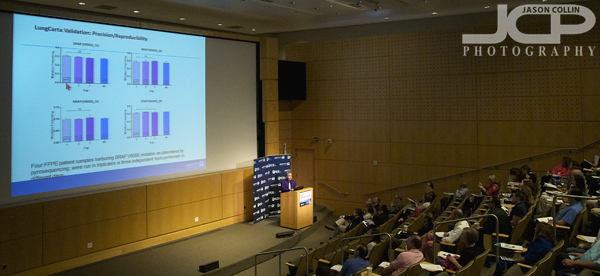
Speaking about melanoma at the PER 2013 Conference at USF Tampa Florida - Nikon D300 Nikkor 80-200mm @ f/4 ISO 2000 1/160th (no flash)I was a USF student in the 1990s.  I have not been back to the campus much since, but I spent over eight hours there on Saturday photographing the 2013 PER Conference on melanoma at the Moffitt Cancer Center.  It was a very weird feeling to hear so many talks, in English, and really not having any ability to put into context the stats and treatments they were talking about!  However, in the end I did start to decipher some of it.  I now know about "ippy."

Inside the 2013 PER Conference at Moffitt Cancer Center USF Tampa Florida - Nikon D300 Tamron 17-50mm @ f/4 ISO 2500 1/60th (no flash)I was given some specific instructions for this conference, the most concerning being that I could not use flash, at all.  I had to only hope there would be enough available light to get decent enough exposures, and thankfully there was.  You will see though some very high ISO settings I had to use!

Break time during the 2013 PER Conference in the Moffitt Cancer Center USF Tampa Florida - Nikon D300 Tamron 17-50mm @ f/4 ISO 2000 1/60th (no flash)There were also specific shot angles needed.  By the second speaker I had pretty much dialed in my settings for each part of the conference room.  I used three lenses to photograph each speaker to cover all angles.  The light and the subject matter was not changing, so once I established my settings and angles, it was a matter of making sure the speaker was not blinking or caught frozen in the photo making a funny face mid syllable.  

Bilmar Resort Hotel Treasure Island Beach Sunset Portraits with Lisa

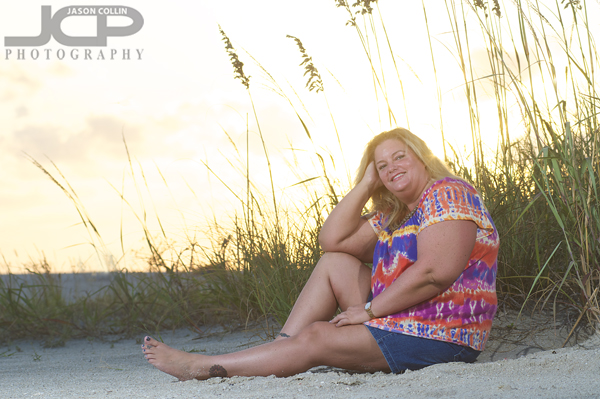
Lisa on the beach at sunset at Bilmar Hotel Resort on Treasure Island Florida - Nikon D300 Nikkor 80-200mm @ f/5.6 ISO 200 1/200th - Strobist: SB-800 to frame left & SB-600 to frame rightVisiting from Chicago, Lisa wanted to have some professional portraits made of herself on vacation.  I met her at the Bilmar Hotel, a place I have shot at before.  The weather the three days prior to our shoot were nearly constant rain, and Lisa was concerned, but my lucky weather streak for beach portraits continued as you can see we had a near ideal sunset.

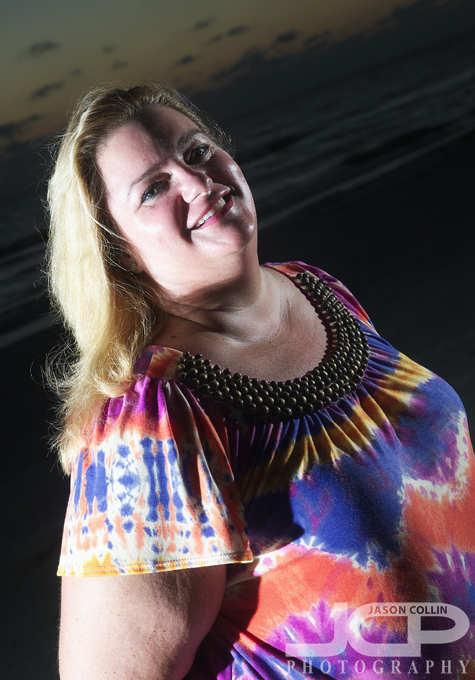
Twilight beach portrait at Bilmar Hotel on Treasure Island - Nikon D300 Tamron 17-50mm @ f/5.6 ISO 200 1/200th - Strobist: SB-800 behind subject & SB-600 in front rearLike many people, Lisa told me she was not that comfortable having her photograph taken, but as is often my experience, they turn out to be much better models than they ever thought they could.  I may see Lisa again for a photography lesson in the spring when she returns with a Nikon DSLR of her own.

1-on-1 Nikon D5100 DSLR Rooftop Photography Lesson with Lisa in St. Petersburg Florida

Up at the top of a parking garage in downtown St. Petersburg Florida, Lisa practices shooting in manual mode with her Nikon D5100The last time I met Lisa in downtown St. Petersburg for a 1-on-1 DSLR Photography Lesson with her Nikon D5100 the most powerful thunderstorm of the year hit!  It allowed us to get some cool funnel cloud and lightning shots, but it also made us nervous.  The weather for this morning's third of four photography lessons was the usual Florida sunshine with only the persistent heat to deal with.  

Lisa is taking a trip to Tennessee later this month and wanted to get some practice in photographing wide open scenery.  Now that The Pier is closed, I suggested we go to the top of a parking garage for the best high views.  I also gave Lisa a thorough review of shooting in manual mode and kept trying to stress there is no need to ever ask what shutter speed should be used, the meter tells you what shutter speed is needed for a proper exposure.  The only thing you need to remember about shutter speed is not to go below the minimum speed for hand holding a shot (1/60th in most cases).

I look forward to seeing her photos of Tennessee mountains and rivers.

Private Jet at the Tampa Jet Center HDR Event Photography

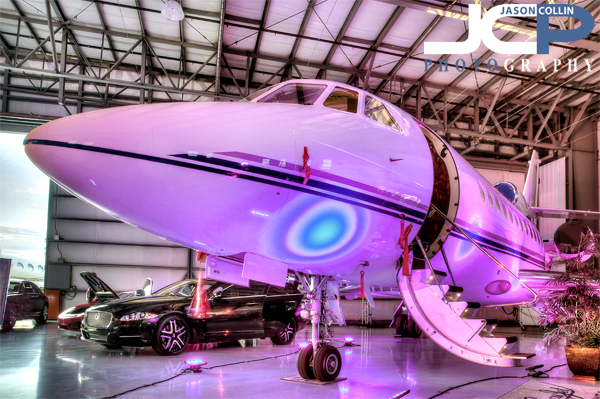
Private Jet for sale at Tampa Jet Center - Nikon D300 Tamron 17-50mm @ f/8 ISO 200 9-exposure HDR tripod mounted with cable releaseThis is what it would take for me to be able to travel internationally now, a private jet, as I would not travel anywhere without Kiki and commercial air travel is far too dangerous and risky for a dog.  That is ok though, there is plenty of North America yet to be seen that can all easily be reached by car, which is my much preferred method of travel anyway.  Still, there is no doubt a private jet has a certain allure.  You can go anywhere in the world anytime on your own schedule.  On the other hand, it would also seem to be the greatest negative impact an individual can make on the environment in a single act. 

Photography Tip - fill the frame corner to corner - Florida Pelican Fine Art Photography

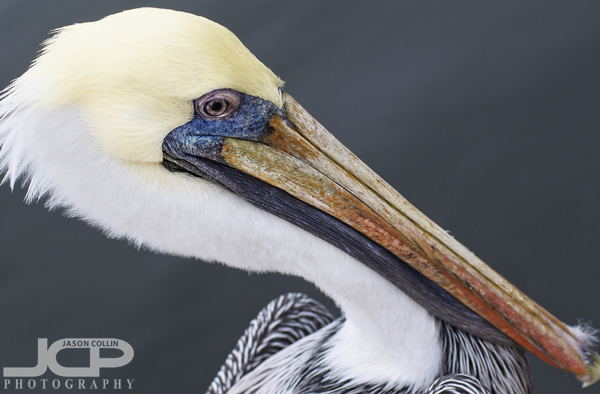
Fill the frame corner to corner to make an impact with composition - brown pelican St. Petersburg Florida Fine Art Photography - Nikon D300 Nikkor 80-200mm @ f/5.6 ISO 200 1/250th

At any given moment, you can find a brown pelican to photograph in downtown St. Petersburg, Florida.  Chances are you already have numerous pelican photos in your archives.  This can be said for any number of common subject matters.  So how to make such a common subject stand out?  One way is to use a more creative composition, like having the subject fill the frame corner to corner.  Use the shape of the subject to fill the frame in the most complementary way.  For the pelican, with it's long narrow head, going diagonal corner to corner allows for filling the frame with the subject.  Also, going through the edges of the frame creates a very different impression than fitting everything inside (with any subject it also helps to have a good, clean, complementary background; in the above photo the dark water of Tampa Bay combined with the large aperture I chose creates a smooth, gray bokeh).

When you go out shooting next time look for a subject that you can frame corner to corner.  

Ferrari F430 Spider Digital Composite Tampa Florida Car Photography

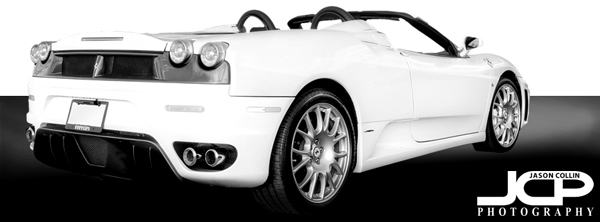
This is actually a yellow Ferrari F430 Spider converted to black & white and put on a digital background in PhotoshopFor some reason I got it into my head yesterday afternoon to finally edit this photograph of a yellow Ferrari F430 Spider that I had lingering for almost a year.  I have posted other shots of this particular car actually, but this shot I guess I did not like as much.  My motivation to edit it now was because I envisioned cutting it out of its original background and placing it on a half black half white digital background as seen in the above image.

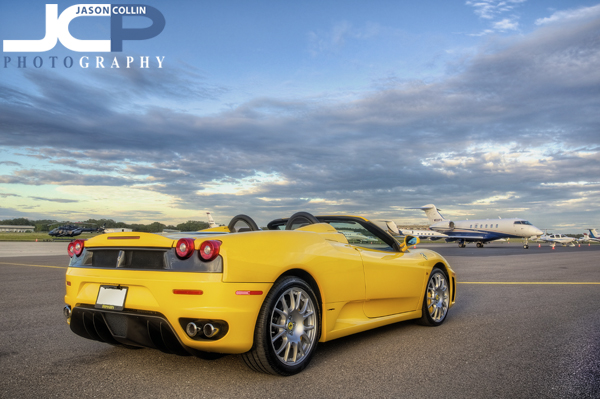
Original image used for the above digital manipulation of a Ferrari F430 Spider - Tampa Jet Center - Nikon D300 f/11 ISO 200 7-exposure HDRThis is the original HDR image made from a bracketed 7-exposures.  What do you prefer?  The black & white Photoshop edit or the original HDR image?