Photography Tips

Canon T3i Natural Light Portrait Photography Lesson in St. Petersburg with Elizabeth

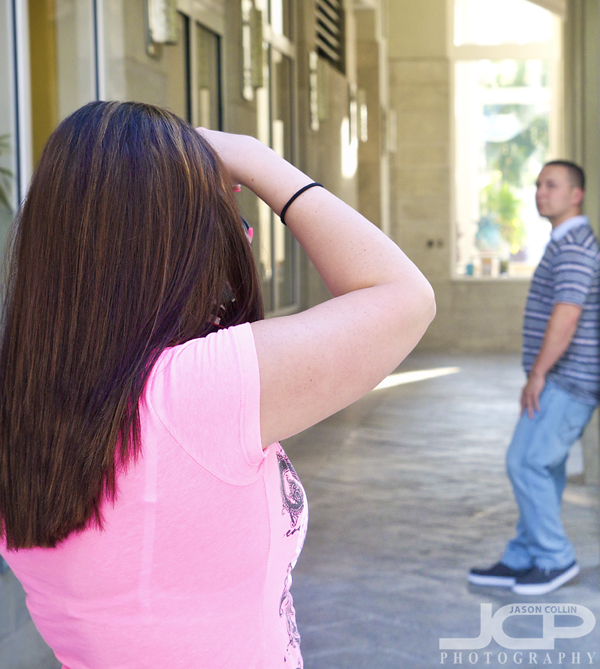
Elizabeth photographing her boyfriend who thankfully modeled during our natural light portrait photography lesson in St. PetersburgFor our second of four 1-on-1 DSLR Photography Lessons in St. Petersburg, Florida Elizabeth brought her boyfriend and his brother to model for our lesson on natural light portraits.  This was great for me as otherwise I would have had to of been the one in the shots as I am most of the time when students want to practice portraits.  Bringing your own model also has the benefit of at the end of the lesson you have portraits of someone you know that you can share and display rather than twenty forgettable shots of yours truly.

Elizabeth will soon be investing in some strobist gear, so instead of bothering to use the almost useless popup flash in portraits practice, I had her put on her Canon 70-300mm lens and just use natural light and over exposing techniques to make some creative portraits all over the place, from under a shaded hall of columns (see above) to the interior of the Baywalk parking garage to the front steps of a museum.  

Indeed we also practiced making silhouette shots atop the parking garage utilizing a railing high up in the air to create some rather cool images.  Thanks to the models' willingness to go wherever we asked Elizabeth not only learned the technique for using natural light in portraits, but also actually ended up with some great shots of her boyfriend and his brother.

Canon T3i 1-on-1 DSLR Photography Lesson in downtown St. Petersburg Florida with Elizabeth

Elizabeth with her new Canon T3i learning how to use manual mode & leave auto-mode behind!I met Elizabeth on a warm St. Petersburg morning for our first of four 1-on-1 DSLR Photography Lessons to help her get off auto-mode and on her way to making photographs with complete control over exposure.  She brought with her a new Canon T3i and a pair of lenses (18-55mm & 70-300mm).  We begin with how to properly change lenses to minimize the amount of time the DSLR's sensor is exposed which could possibly lead to getting unwelcome spots on it that will need to be tediously cleaned using a special kit or taken to a pro for worry free cleaning.  I still take my own DSLR in to The Camera Cure when it needs a cleaning as I am of messing with the sensor.

Next I showed Elizabeth how to get around her T3i and change all the settings necessary for getting a well exposed and in-focus shot.  We stayed on aperture priority mode most of the 2-hour lesson as the T3i's meter did a pretty good job of selecting the shutter speed.  

Elizabeth would eventually like to make portraits for money, so the conclusion to this first lesson was touching on the basics of what lens, focal length, aperture, shutter speed and when to use and not use flash.  We will go into how to make portraits in much greater detail during our second lesson where I am very thankful she will be bring a model to practice on saving me from having to be both instructor and subject!

1-on-1 Nikon D90 DSLR Photography Lesson with Chris at The Pier

Getting to eye level with your subject during a 1-on-1 DSLR Photography Lesson with a NIkon D90 in St. Petersburg FloridaFor our second of four 1-on-1 DSLR Photography Lessons Chris and I went out to The Pier in downtown St. Petersburg in an attempt to photograph birds in flight, in particular pelicans.  Well, there were many pelicans, but they were all only lazily napping or preening themselves!  Still, we were able to practice good composition skills, switching back and forth from shutter priority to manual mode, as well as AF-S to AF-C focus modes.  Now Chris will have both brown pelican shots in her portfolio and a cormorant too!

We also practiced basic landscape photography from the top of The Pier, which on a Monday morning we had entirely to ourselves.  Since Chris will soon visit the Smoky Mountains I pointed out that for landscape shots one does not always automatically use a wide angle lens.  If a mountain is very far away then using a medium telephoto lens like a 70-200mm could be the ideal lens to a landscape shot (see my shot of Mt. Fuji) featuring just the mountain itself.

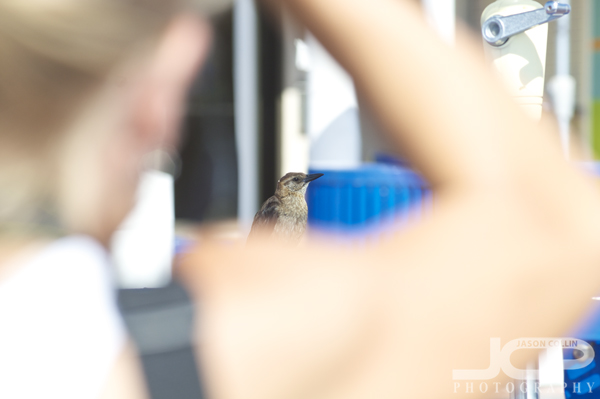
Chris photographing a small bird during our lesson at The Pier in St. Petersburg

I look forward to seeing Chris' Smoky Mountain images, especially if she makes the effort to wake up an hour before sunrise and really capture some of that morning mist on the mountains!

How to Photograph Fireworks - 4th of July Fireworks St. Petersburg Florida 2012

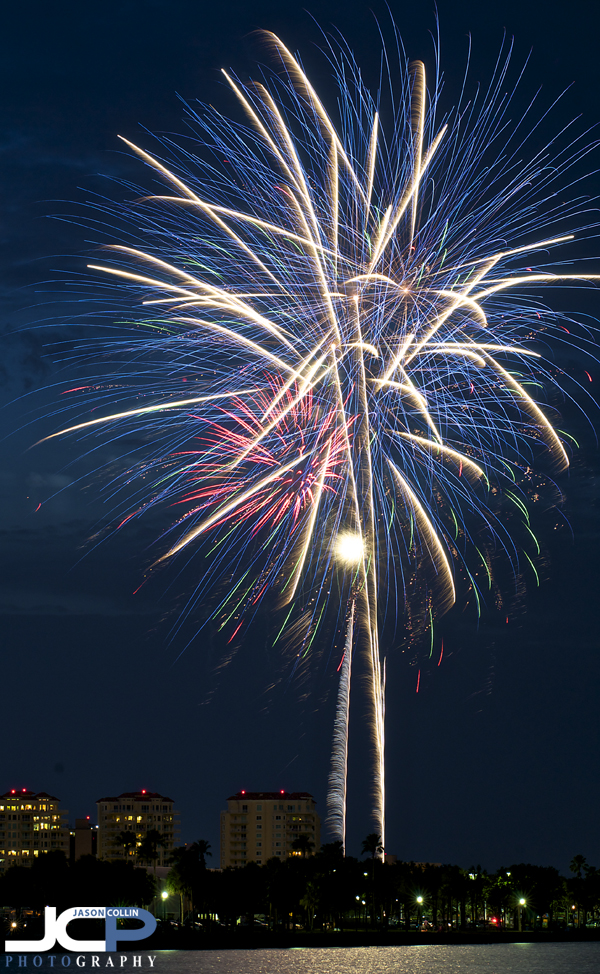
4th of July Fireworks over downtown St. Petersburg Florida 2012 - Nikon D300 Nikkor 80-200mm @ f/11 ISO 200 10.5 sec tripod mounted with cable release covering lens frequently with a cardThere is an art and methodology to photographing fireworks that if you have the necessary gear is pretty fun.  To photograph fireworks properly you need:

  • DSLR camera with bulb mode
  • Lens with appropriate focal length for your location
  • Very stable tripod
  • Cable release
  • A stiff card large enough to cover the front of your lens

Other tips for shooting fireworks:

  • Choose a spot with a clear open view (obviously!)
  • Choose a spot that is upwind (so smoke does not blow into your shots)
  • Include foreground elements (do not just shoot the fireworks themselves)
  • Do not record overlapping fireworks (will just look blown out in one spot)

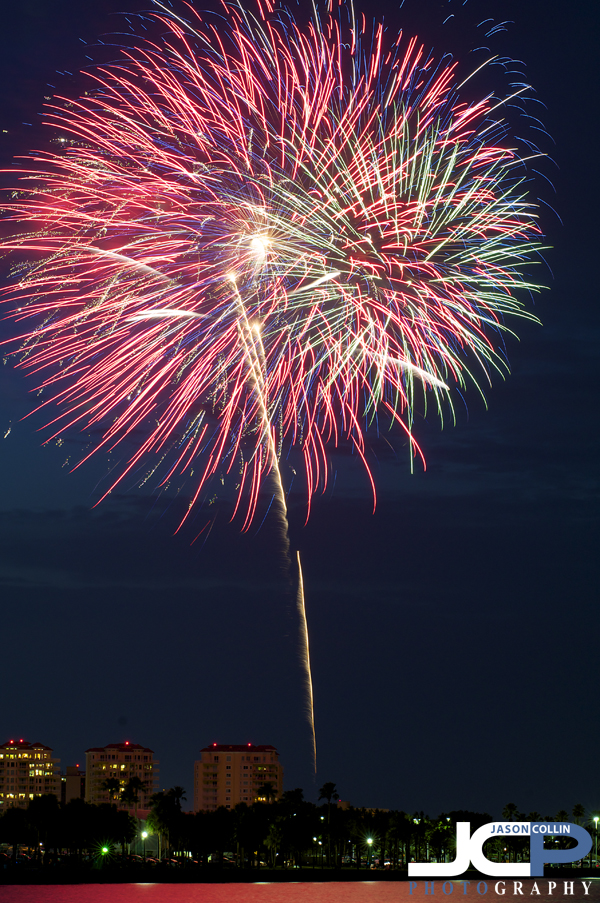
4th of July Fireworks in St. Petersburg Florida 2012 - Nikon D300 Nikkor 80-200mm @ f/11 ISO 200 27.4 sec tripod mounted with cable release covering lens frequently with a cardThe actual process for making and recording a multiple firework image:

  1. While still light out focus on something where the fireworks will be
  2. Set your focus to manual focus so you do not have to worry about autofocusing in the dark
  3. Use manual exposure mode set to bulb mode and f/8 or f/11 & your lowest ISO
  4. Hold the shutter open with your cable release when seeing a streak going into the air
  5. Cover the front of the lens quickly & carefully with the card
  6. When the firework explodes remove the card for a split second
  7. If another firework explodes in a different spot, remove the card again
  8. Repeat step 7 a few times then release the shutter

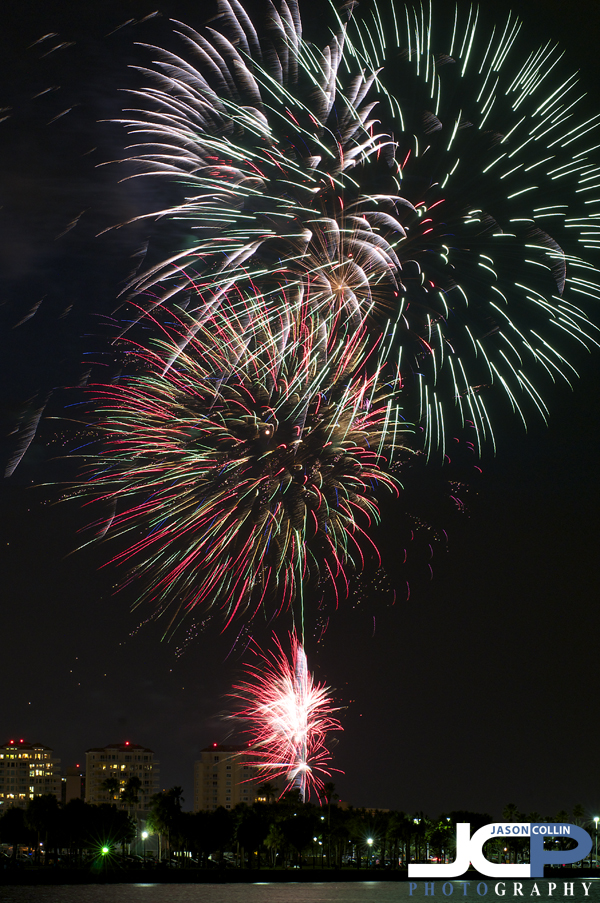
4th of July fireworks finale in St. Petersburg Florida 2012 - Nikon D300 Nikkor 80-200mm @ f/11 ISO 200 28.8 sec tripod mounted with cable release covering lens frequently with a cardI also try to avoid removing the card for fireworks that are just bright balls of light as these tend to overexpose and just look like all-white blobs.  Overly bright fireworks can also reflect light onto smoke in the sky ruining the shot.  The ideal is to catch a streaking firework trail going up, a low firework explosion, a middle one, and then a very high one.  This evening they tended to explode in the same spot like three times in a row, which is no good as the overlapping makes them start to again look like an all-white blob.  If you are patient, study the patterns of explosions, and use good technique exposing the front of the lend with the card, then you will give yourelf the best chance at creating a satisfying fireworks multiple explosion image.  

Post a link to your fireworks shots in the comments below!

1-on-1 DSLR Photography Lesson in St. Petersburg Nikon D90 with Chris

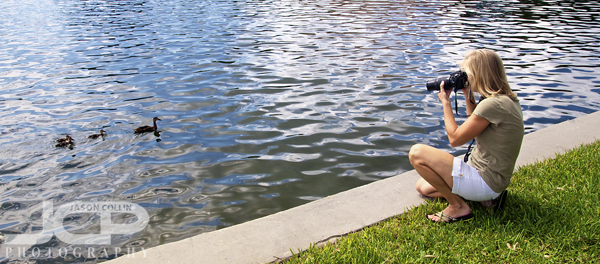
During our 1-on-1 DSLR Photography Lesson Chris had a chance to photograph these ducklings!On a not too hot St. Petersburg morning I met new DSLR Photography Lesson student Chris for our first of four 1-on-1 photography lessons.  She had taken a photography class about a year ago, but soon after reverted to using auto-mode again so in our lessons I will help her get off of that once and for all and learn to love manual mode!

She has a Nikon D90 and a pair of lenses to go along with her already acquired photography knowledge.  We started with a tour of her DSLR and how to change the four (or five if in manual mode) necessary settings for any given shot.  The D90 has two dials and a top LCD making it pretty quick to be able to do a wholesale set of changes.  For anyone wanting to be serious about shooting in dynamic situations, I highly recommend a DSLR with that feature set, otherwise it will take much longer to change settings than you will most likely have.  

Toward the end of our 2-hour lesson it was a nice surprise to come across a mama duck and her three ducklings.  They provided a very fun subject matter to practice photographing moving subjects.  The key of course is setting the focus mode to AF-C (Ai Servo) and then using good tracking technique to maintain a focus lock on the moving subjects by always keeping the shutter pressed halfway down.

For our second lesson will we head out to The Pier to photograph pelicans and other wonders.

Photography Tip - It only has to interest you - drumsticks

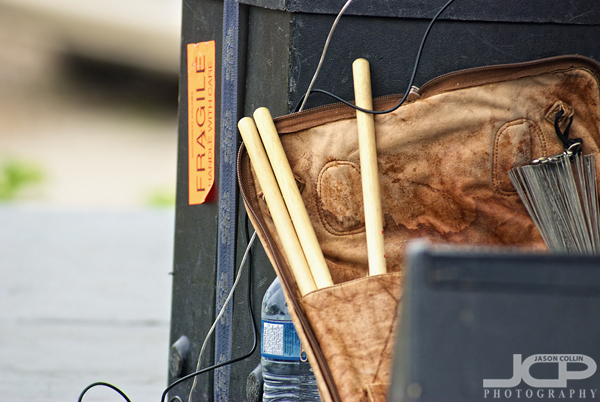
These drumsticks & their case interested me - Nikon D80 Nikkor 80-200mm @ f/4 ISO 400 1/200thI first and foremost make photographs that interest me.  This for the most part even applies when I am shooting for a client as I trust they hired me because they liked my past work and know that I will bring that same perspective to their shoot as well.  I made this drumsticks shot while shooting a Brett Eldredge concert for an event client.  This photograph may have no interest to anyone but me, but that does not come into my thinking at all when I made the image.  I was drawn to the satchel the sticks were sticking out of in particular.  It looked very old and worn and thus must have a great story behind it.  I never talked to the drummer about it, but I wanted to make a photograph of it for my own memory and for me to wonder what might be the origin of the satchel, was it his father's before him, or given to him by a drummer he looked up to?  Those questions interest me, even if I can never get an answer to them.

I included this image in the 240+ I delivered to the client.  It may just be a throwaway image, but for me it will be a reminder of that concert and shooting that job.  

Shooting what interests you first and foremost is what one should really only ever do in one's personal shooting.  I cannot imagine doing otherwise really.  When just going out shooting (not for a client) why would you ever shoot anything that does not interest you?  Likewise, shooting something you think will be interesting to others, but is not interesting to yourself, I cannot imagine the point in doing that and I would also imagine the results of those photographs would be very subpar at best.  

If no one else in the world finds the photograph interesting, but you do, then that is still a successful photograph.  That is my thinking.

Use Negative Space when composing photography tip

Composing with negative space - Nikon D300 Tamron 17-50mm @ f/11 ISO 200 1/400th

 I often tell my DSLR photography students to "fill the frame" when composing shots.  I also recently wrote about how not including the entire motorcycle makes for an image with more impact.  That said, another composition technique follows just the opposite of those and calls for using negative space in the frame to be part of the photograph.  

In the above image instead of filling the frame with the palm tree, or using a rule of thirds type of composition, the palm tree is composed as to look small and isolated allowing the negative space itself to be the main subject of the photograph.  Filling the frame with negative space gives the impression of great expansion, or rather, no end once the eye reaches the edge of the frame.  The viewer's eye continues on past the edges filled in by their own imagination of what goes beyond.  

Post a link to your example of negative space composition in the comments below.