Photography Tips

Nikon D50 DSLR Photography Lesson with Sunil in St. Petersburg Florida

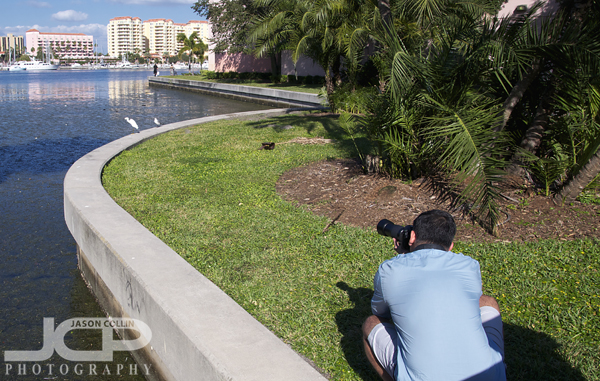
Sunil photographs egrets during our downtown St. Petersburg Florida DSLR Photography LessonNew DSLR Photography Lesson student Sunil was referred to me by Alok, who took his lesson back in September . . . thank you Alok!  This was also my first mid-afternoon lesson time since the spring, but the fall weather we had a few days ago disappeared and it was not very fall like afterall today.  Sunil has a Nikon D50 and a bag full of lenses.  He has photography vocabulary knowledge, and knows how to adjust the necessary settings on his DSLR, but wanted to learn how to tie it all together when using manual mode, especially.  

Despite Sunil's experience I still taught my tried and true methodology for making a photograph, starting with setting aperture, then shutter speed (when using manual mode), followed by ISO, WB and focus mode.  Through this process more things about photography were revealed that Sunil said you cannot learn no matter how many online photography videos you watch.  I of course agree, that there is nothing like a 1-on-1 lesson in the field because it provides instant feedback about the exact shooting situation you are in.  

Sunil bought my discounted 4-pack of lessons and wants to take them all this week as he is on vacation.  We will meet again tomorrow for a night photography lesson out on The Pier.

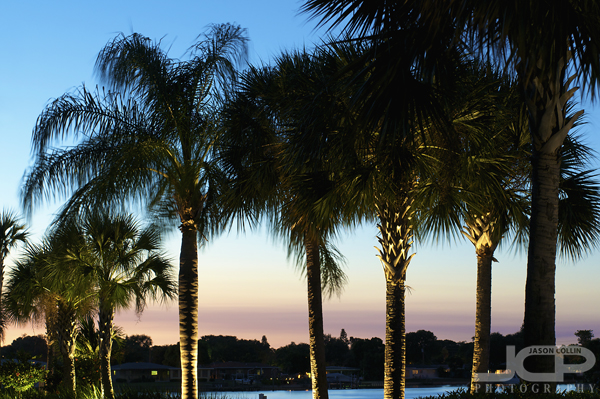
Vivid Florida Waterfront Neighborhood Twilight Palm Trees

The best part of living in Florida, its sunset & twilight views - Nikon D300 with Nikkor AF ED 80-200mm f/2.8D @ f/8 ISO 200 10 sec on Induro CT214 tripod with Nikon MC-30 cable releaseIf you are a photographer living in Florida, very likely you will, at least at first, be most drawn to photographing the magnificent twilight and sunset skies Nature provides on a daily basis.  The time of the transition from day to night is my favorite part of the 24-hour day cycle.  I have a fantastic view of this from my back patio, but to be honest, I do not take advantage of it enough.  In summer with the later sunset time, it is easier as I often take Kiki for our evening walk between 8pm and 8:30pm.  Now back in regular time, with sunsets coming before 6pm, our walks are in all darkness, but those provide stargazing opportunities.

Vivid twilight photographs are not difficult to make.  All you need are:

  • a western view (or eastern if clouds available to reflect twilight)
  • a sturdy tripod
  • the correct shutter speed to pull the most color from the sky

The DSLR and the lens used do not matter that much.  The sturdy tripod eliminates problems of camera shake resulting in blur.  The correct shutter speed eliminates exposure problems, but since you are using a very long exposure, there is a wide range of choices depending on one's desired results of a brighter or darker twilight image.  So unlike many other types of photography, the margin for error in twilight shooting is far greater than say a sunset portrait.

  • Read more photography tips
  • Reserve your own 1-on-1 DSLR Photography Lesson with Jason today!
  • Learn more about the lessons
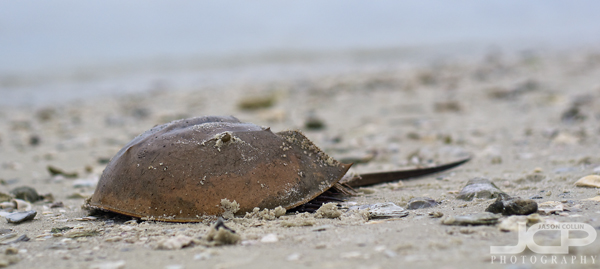
  • Horseshoe crab continues the cycle of life

    Farewell, my friend . . . Nikon D300 with Nikkor AF 50mm f/1.8D lens @ f/2.8 ISO 200 1/5000th natural light; lying on my stomachA horseshoe crab is perhaps the first creature of such size I ever saw dead in the wild.  I think as a child though I never really thought of the ones I found on the beach as being dead.  I think I probably just thought that's how these creatures exist.  I mean, by all outward appearances a horseshoe crab on the beach with its solid eyes still open and unblinking, appears alive.  

    I came across this horseshoe crab on a hidden beach in Bradenton as it was preparing to continue the cycle of life.  I got down on my stomach and laid flat on the sand to see life from its perspective.  It was also the best angle to photograph the horseshoe crab from.

    Photography Tip -- lie on your stomach for a unique composition and viewpoint

    At my current age and in my present mindset I did not view this horseshoe crab as being dead, nor do I other of nature's creatures.  I think of them as merely continuing the cycle of life.  Afterall, if everything lived for ever, then there would be no meaning to life.  It is a very clever system, one that requires some to die so that others may live.   

  • View more nature & wildlife photo stories
  • Read more philosophy
  • Find more photography tips
  • DSLR Photography Editing & Workflow Lesson with Kamila in St. Petersburg

    This afternoon I visited Kamila at her very nice new home for another DSLR Photography Lesson focusing on workflow, editing and also getting the exposure right for very specific shooting conditions.  As you can see, Bob the Yorkshire Terrier was an integral part of the lesson as well!  Kamila had a list of questions ready (good idea), the first of which was deciphering what all the symbols and buttons on the back of her Nikon SB-700 Speedlight mean.  This piece of Nikon gear is not very intuitive at all, not that really any speedlights are.  Although there are way more dedicated buttons on the back of the SB-700 compared to the SB-600 model it replaces, the SB-700 actually seems more difficult to use, at least at first.

    Once the mysteries of the speedlight were solved we moved on to DoF (depth of field) issues, specifically making sure both father and baby are in focus during a tightly framed portrait using a 35mm f/1.8 lens.  After checking the photo in question's exif data, and seeing the aperture of f/3.2, it was easy to diagnose the problem as being the result of too large of an aperture.  I advised Kamila to use f/8 or even f/11 to insure the in focus plane is large enough for both sets of eyes.  We practiced this by using two stuffed animals on her sofa to produce an image with no DoF problems.

    We concluded the lesson discussing what computer hardware and software would help improve her workflow, which now is rather disjointed and definitely not as efficient as it could be.  She mentioned maybe getting a new Mac soon, which I said was a great idea because then she could use the excellent Aperture 3 to process, organize and edit all her RAW images (once she makes the switch to shooting in RAW).

    I look forward to our next lesson which will be about using off camera flash, possibly even two speedlights, and of course to seeing Bob again too!

    Canon XS DSLR Photography Lesson with Suzanne in St. Petersburg

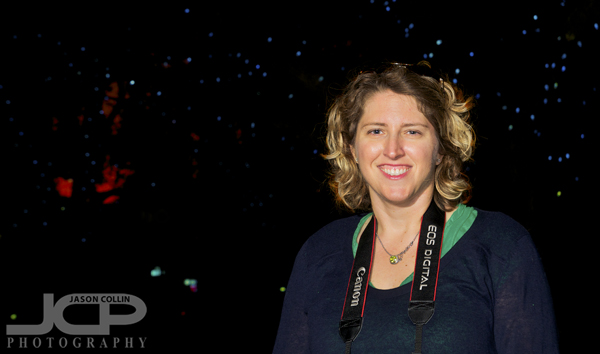
    Halloween lights provide the background in downtown St. Petersburg for my first DSLR Photography Lesson with SuzanneSince neither of us had trick or treating plans, I met Suzanne for our first DSLR Photography Lesson in downtown St. Petersburg early in the Halloween evening.  There was surprisingly little spooky activity happening and no one in costume to photograph.  Still, we managed to practice no less than five shooting techniques in our first of four 2-hour lessons!

    Suzanne was already familiar with some photography terms and just needed clarifying and instruction on how they all tie together, especially in the DSLR world.  Also, since she already knew how to change some of these settings on her Canon XS, we were able to practice more than usual in a first lesson, especially since the early sunset time in late October afforded a chance to practice motion blur shots.  

    I look forward to our next lessons which will cover photographing sunsets, action shots and more!

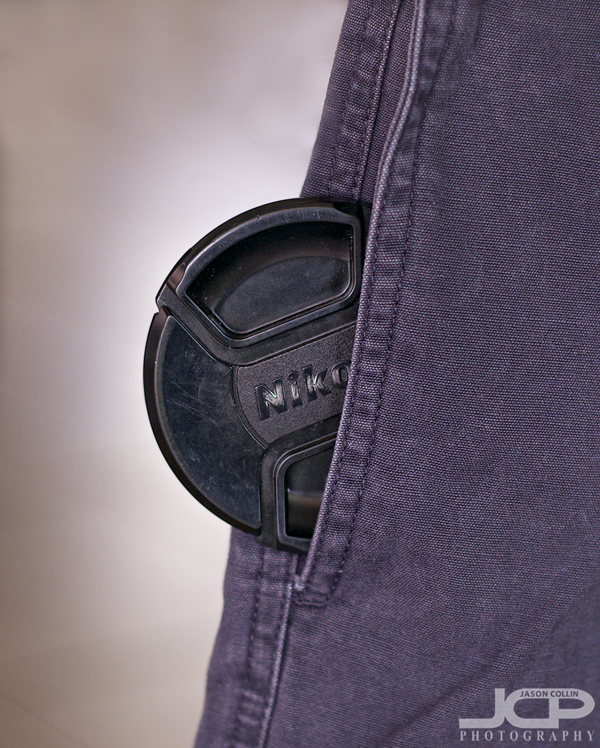
    Photography Tip - Keep your lens cap in your front pocket

    I always keep my lens cap in my right front pocket so I never have to look for it and never lose it.The more time you spend looking for your lens cap and various other photography accessories, the less time you have to focus on your client and get the shot.  Even if you are a hobbyist photographer, the perfect photography opportunity seldom waits so if you are fumbling for something in your camera bag you may end up out of luck.

    Photography Tip:  Keep your lens cap in your right front pocket

    I have always kept my lens cap in my right front pocket.  Even when I made the above shot right here in my living room I still put the lens cap to the lens I was using (50mm f/1.8) into the right front pocket of the shorts I was wearing.  

    Where do you keep your lens cap? 

  • Read more photography tips
  • Reserve your own 1-on-1 DSLR Photography Lesson with Jason today!
  • Learn more about the lessons
  • Nikon D700 & Nikon SB-900 Speedlight DSLR Photography Lesson St. Petersburg

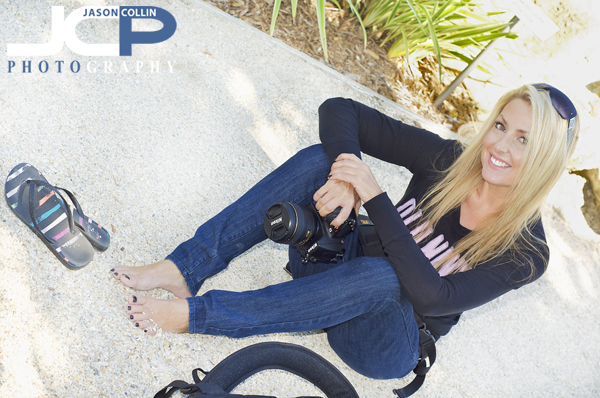
    Barbie relaxing during our 6th DSLR Photography Lesson with her Nikon D300 at the New Dali MuseumBarbie returned from her many travels for our sixth DSLR Photography Lesson this morning at the New Dali Museum in downtown St. Petersburg.  As you can see from the photo above, she makes herself very comfortable while doing photography.  We were not on a beach but under a large tree behind the museum that has a pathway made up of of broken shells.  

    We kept the flash on the camera for today's lesson, but still produced creatively lit portraits (unfortunately I had to be the model!).  I really like using the Dali Museum location for photography work, and of course photographing the museum itself, especially at twilight, can produce dynamic results (see here).

    I had Barbie really concentrate on thinking which settings to use before pushing the shutter as we shot in various lighting and background situations.  As a photographer, as you move to the next location you should already be thinking of what kind of shot you want to make, which in turn dictates which settings you will need.  If you change light between locations and keep the same settings, well, the results will of course be very overexposed or underexposed.  Even though it's all digital, I do not like to waste shots.  Plus, if the shot is too bad it gives me no reference to use to hopefully perfectly dial in my settings by the second shot.  

    Lessons with Barbie are always fun and before she travels again we need to finish our remaining two lessons!