Photography Tips

McLaren 650S in black multiple strobist blend layer mask photography tip Clearwater Florida Car Photography

What if you want to photograph a large object, especially in a low light situation, but you only have two speedlights, or even only one?  No problem!  Here is how you can do it and what you will need.

Photo gear used to photograph the McLaren 650S indoors:

  • Nikon D300
  • Tamron 17-50mm f/2.8
  • SB-800 & SB-600 Speedlights
  • 2 shoot through umbrellas
  • Yongnuo radio triggers
  • tripod
  • cable release
  • assistant (to help move and hold the lights)
  • Photoshop CS5

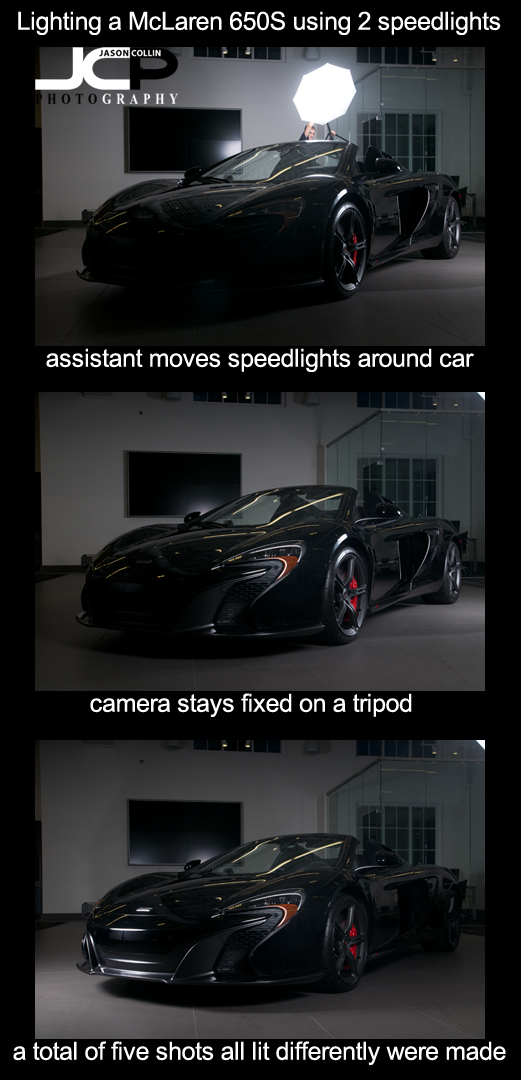
A tripod is a must because you will need to take multiple shots from different angles to properly light the subject, in this case the McLaren 650S supercar.  In all I ended up using five photographs to make the one fully lit photograph (below).  I lit the front of the car first, then moved the lights around the car (counterclockwise in this case) taking another photograph each time.  I even had my assistant hold a speedlight over the top of the car (see top most image).  The assistant being in the shot or a lightstand partially being in the shot is no problem at all as the final step takes place at home in Photoshop using layer masks.
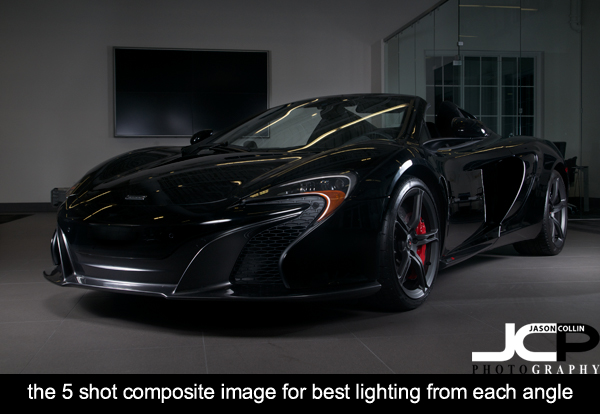
In the above photo all 5 shots have been blended together one at a time using layer masks in Photoshop.  I started with the shot of the McLaren 650S lit from the front.  I then dragged it onto the next photo in the series with the driver's side wheels lit up.  I created a layer mask and then revealed the lit wheels photograph underneath, keeping the front lit part from the other photo.  I then flattened all layers and repeated this process using the other three photographs.  You can see shadows from coming from more than two angles in the above shot because effectively ten speedlights were used to light up the car, not just the two in reality I had for the shoot.  
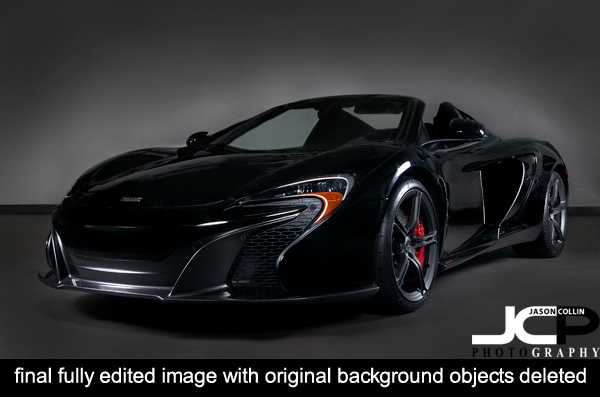
I could have stopped with the 5 shot composite, but I got carried away with removing objects from the background until I finally decided just to remove them all!  I started this edit on Saturday night, and finished it on Monday afternoon it took that long and I kept wanting to do more and more to it.  I did nothing special to remove the background objects, just simply used the Clone Stamp tool on only carefully selected portions of the photo.  Then I removed a lot of the reflections on the car body and cleaned up the floor.  The final result was my most advanced photopraph edit in Photoshop to date!

Give this multiple exposure strobist blend layer mask type image a try and let me know the results in the comments below.

Nikon SB-910 Speedlight 1-on-1 DSLR Photography Lesson at Lettuce Lake Park Tampa Florida with Mike

Mike using the Nikon Creative Lighting System Commander Mode to trigger his SB-910 Speedlight with his Nikon D7000 at Lettuce Lake Park, Tampa, FloridaI met Mike for a second 1-on-1 DSLR Photography Lesson once again in Lettuce Lake Park, Tampa, Florida this past Saturday.  Since our first photography lesson on the 4th of July he has invested in a Nikon SB-910 Speedlight which he got for a great price.  We met in the visitor's center which provided not only a cool, climate controlled space, but also one very much like a regular private home indoor lighting situation.  There were dark corners as well as large windows letting in lots of light.  We started off with seeing just how powerful his speedlight was, and found it to be very powerful.  After locking in camera and speedlight settings, then it was largely a matter of how to angle the speedlight head.  I showed Mike that even just a centimeter one way or the other can have a pretty big impact on how the photograph looks.  

We then moved over to the large windows to show how to balance the exposure in a backlit situation.  I had Mike first set the shutter speed to get the windows to look well exposed.  Then we dialed in the speedlight power and angle to illuminate the subject to match, with that subject of course being me!  Without a speedlight it would have been impossible to see outside the windows and the subject, one or the other would have to be a silhouette.  Thus, a speedlight is a very necessary photography tool for photographing backlit subjects, as well as many other situations.

For the last practice we went outside and found the limits of the Creative Lighting System and Commander Mode.  In order to get his Nikon D7000 to trigger the speedlight, as you can see in the photo above, the speedlight needed to be twisted toward the camera.  I recommended that Mike invest in a pair of radio triggers that can work in direct sunlight no problem, and also from much further distances.  I look forward to seeing his off camera flash (strobist) results!

Photography Tip - be careful using slow shutter for waterfalls in daylight

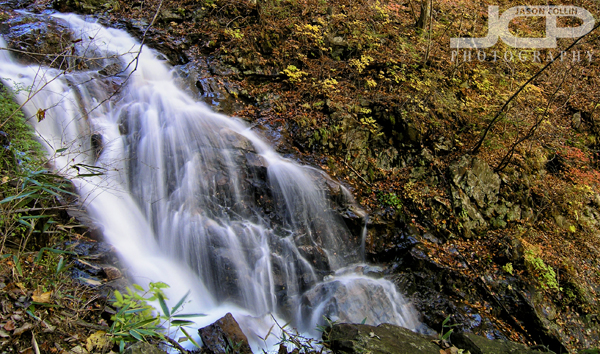
A waterfall in Japan I photographed a decade ago, long before my skills were competent....this was a 0.8 sec shutter speedA photography student recently asked me about photographing waterfalls and specifically about getting that soft cotton look to the water.  Well, to do that, it is rather easy, if you have the right gear and conditions, otherwise it is rather tricky.

The ideal gear to have would be:

  • tripod
  • neutral density filter
  • cable release

Obviously of course you need a DSLR too with an appropriate lens to frame the waterfall.  So if you can mount your camera on a tripod, attach a neutral density filter to the lens, then use the cable release to eliminate camera shake, all is good.  What if you do not have all of that?

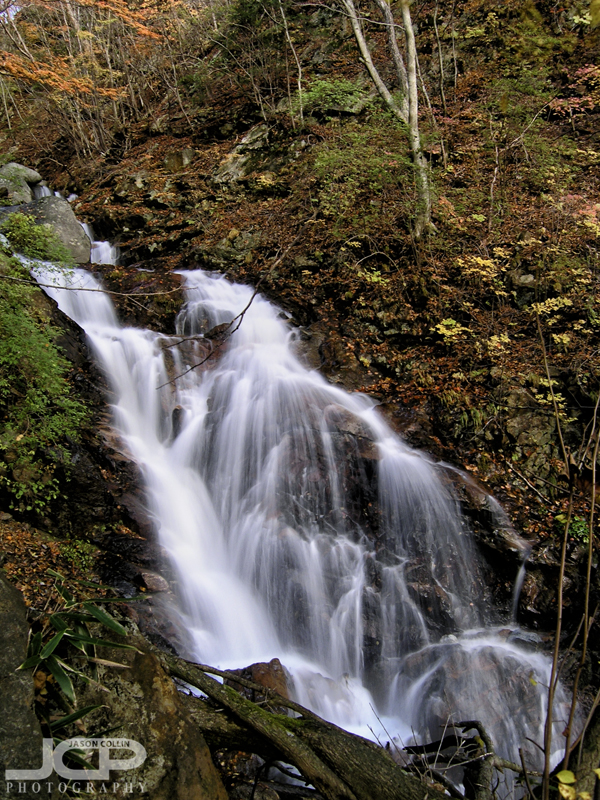
The same waterfall with 0.6 sec shutter speedThese photographs were made when I did not really know what I was doing back in November of 2004.  I had a pretty good digital camera that had manual exposure abilities, but I did not understand aperture properly as these shots were all like at f/3.5!  Should have been f/11.  At least I had a tripod.  If you do not have a tripod, then there is no chance as no one can hold a camera for 0.6 seconds steady.  So you at least need a tripod.  If no cable release, then you can use the self-timer to have your hands off the camera as the shutter opens.  

The problem with shooting long exposures during the day is that it is very easy to overexpose the shot.  Very easy.  So the waterfall shots here do not look as good as they could because I could only get away with a 0.8 sec shutter speed.  Of course if I had used f/11, then I could have used a much slower shutter speed.  Either way, if I had a neutral density filter, essentially a very strong pair of sunglasses for your lens, then I could have left the shutter open for nearly as long as I wanted to get the ideal look to the waterfall without overexposing the rest of the shot at all.  So if you find that you like making these kinds of waterfall shots, and long exposures in general, do yourself a favor and get a good tripod, a cable release, and a good neutral density filter.  

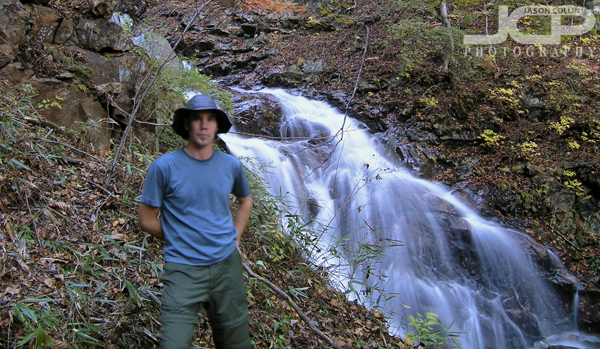
Yours truly circa November 2004...whoops, missed the focus due to using too large of an aperture, something I would never do now.I took the time to even make a self-portrait.  I initially thought I back focused and because of using such a large aperture, I was out of focus, but I now realize it might have just been because I moved some during the 2 seconds the shutter was open!!  If you can believe it, I still wear that same hat everytime I go hiking and now trekking here in Florida.  I actually wore that shirt just last week too!  The photo was from November 2004 in a forested mountainside in Japan.

Nikon D5200 1-on-1 DSLR Photography Lesson with Krista in Lettuce Lake Park Tampa Florida

Krista lines up a shot with her new Nikon D5200 in Lettuce Lake Park Tampa Florida during our 1-on-1 DSLR Photography LessonHaving recently been to Hawaii, and already planning a return trip, Krista wanted to make sure she could make the best photographs possible with her newly acquired Nikon D5200.  So we met for a 1-on-1 DSLR Photography Lesson in Lettuce Lake Park in the north Tampa area this past Saturday morning.  She had read the Nikon manual for her camera several times already, which is a very good thing to do, but of course the manual does not tell you how to in a practical way make a well exposed and sharp shot in any given shooting situation.  Fortunately, that is exactly what my 1-on-1 photography lessons do so after introducing Krista to her Nikon and showing what buttons are needed to do what for my 5-step process for shooting in manual exposure mode, we left the air conditioning of the visitor center and headed out onto the boardwalk.  

As I showed Krista how to be aware of the sun position for getting the best results, and how to use AF-S (One Shot) focus mode to be able to recompose and not have to center the subject all the time, we were also treated to a good bit of wildlife spotting.  At one of the boardwalk end points using my water bottle I showed Krista how to control depth of field so that if desired the background could be made to disappear (create bokeh) leaving only the intended subject in focus.  I look forward to seeing Krista's photographs from her next trip to Hawaii!

Photography Tip - a cloudless sky is the enemy of the landscape photographer

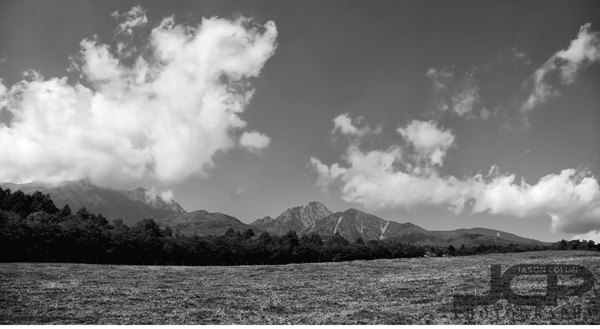
Clouds add a lot to a landscape photograph mostly by making the sky interesting -- Mountains in Yamanashi Prefecture JapanA bright blue, cloudless sky sounds like part of what would make for a very beautiful day, does it not?  Well, if you are a landscape photographer nothing could be worse!  I have heard it put that, "a cloudless sky is the enemy of the landscape photographer."  If there are no clouds in the sky, then it is just an expanse of a mostly solid color with no visual interest, especially if it is a middle of the day plain blue sky.  Even for sunset portraits, I definitely prefer to have some clouds in the background even though the sky is all orange, yellow and red.  

So the next time you are thinking to make a landscape photograph, make sure there are some good clouds to add that extra element of interest to you image.  

Canon T3 1-on-1 DSLR Photography Lesson with Kristen in St. Petersburg Florida

Kristen points her Canon T3 out at Tampa Bay during our 1-on-1 photography lesson in St. Petersburg FloridaOn a very humid, but thankfully overcast, Monday morning I met Kristen in downtown St. Petersburg for a 1-on-1 DSLR Photography Lesson with her long owned but never used Canon T3.  She received it as a present for Christmas, in 2012.  With an upcoming trip to Iceland planned, she decided she wanted to learn how to use it.  I am always glad to help someone make use of a long owned but little used DSLR.  There is a learning curve of course to manual photography, but it is not an overly steep one and with my 5-step process, I can actually teach someone theoretically all they need to know in less than 2-hours!

Kristen was a very careful notetaker during the lesson, something I encourage because even though I send a PDF photo guide of the things we cover during the lesson, having notes in your own words can really help.  She also asked questions too, which actually showed me she was grasping things very well about how to go about getting the exposure right and when to adjust aperture, shutter speed and ISO in the correct order to maximize image quality and exposure.  I look forward to seeing her results with all the knowledge she now has to shoot in manual mode with her Canon.

Nikon D7000 1-on-1 DSLR Photography Lesson at Lettuce Lake Park with Mike

Mike framing a shot on the boardwalk at Lettuce Lake Park with his Nikon D7000 during our 1-on-1 photography lessonIt was a return to Lettuce Lake Park in Tampa for me to meet Mike for a 1-on-1 DSLR Photography Lesson with his Nikon D7000.  He is going on a trip to Italy in a couple months and wanted to learn how to get the most out of his photography gear.  Having real photography skills I think is extremely valuable, not just for a pro shooter, but for any enthusiast photographer as his/her photos of family, friends and vacations will be at a whole different level than photos from years past.  

After going how to use his Nikon D7000 camera body in the visitor's center, we wandered out onto the boardwalk to put the 5-step process I had detailed to him to practical use.  This 5-step process allows one to make a well exposed and sharp photograph in any shooting conditions.  The boardwalk takes us from bright sunshine (see above) to deep shade such that even though it was day time, we found conditions where the limit of aperture and shutter speed were reached and the ISO needed to be increased.  We only used one of Mike's lenses, so when we meet again it will be on to longer focal lengths!