Nature & Wildlife

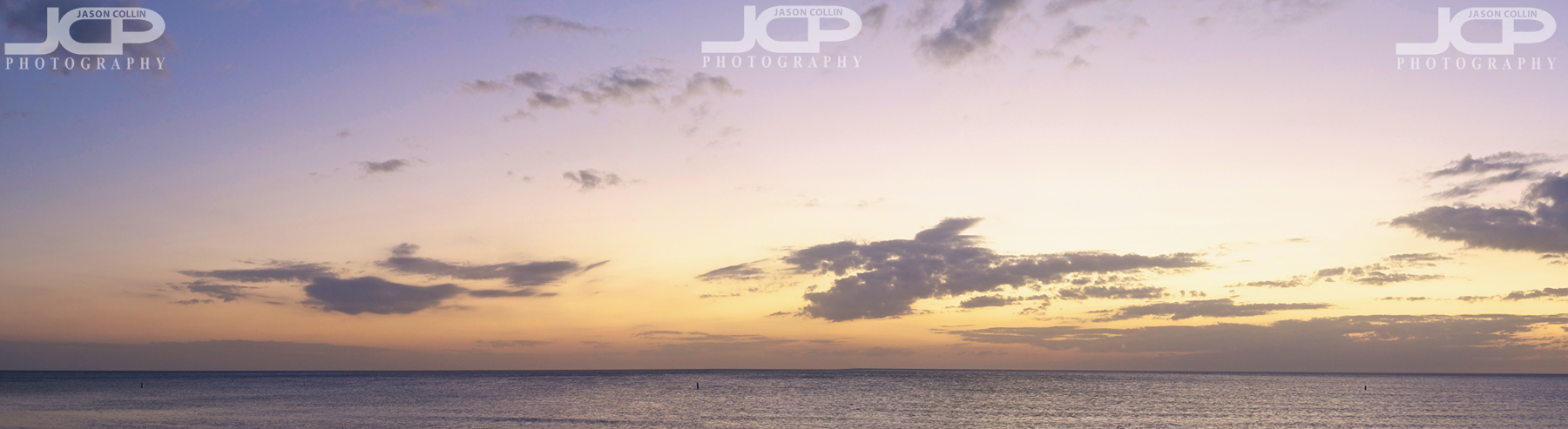
Sunset Beach Florida Panorama Landscape at Twilight

Sunset Beach Treasure Island Florida at Twilight - click to view at 1800px - 4-shot panorama image - available for commercial license and fine art print

I have heard that Montana is called Big Sky Country.  Picturing that in my mind has fascinated me for years.  I have lived in claustrophobic places, where glimpes of the sky are all that is allowed.  Fortunately, for a majority of my life I have been able to gaze westward across a 180 degree expanse of the Gulf of Mexico.  The horizon is not infinity, it is Texas.  Still, since 1992 when I first discovered Sunset Beach, it has become a sacred place to me.  

A whole novel could be written about my time on that half mile strip of sand over the past 19 years, though I would not want to share those stories, at least not yet.  For now I will only share the view that has given me solace and freedom of mind.  

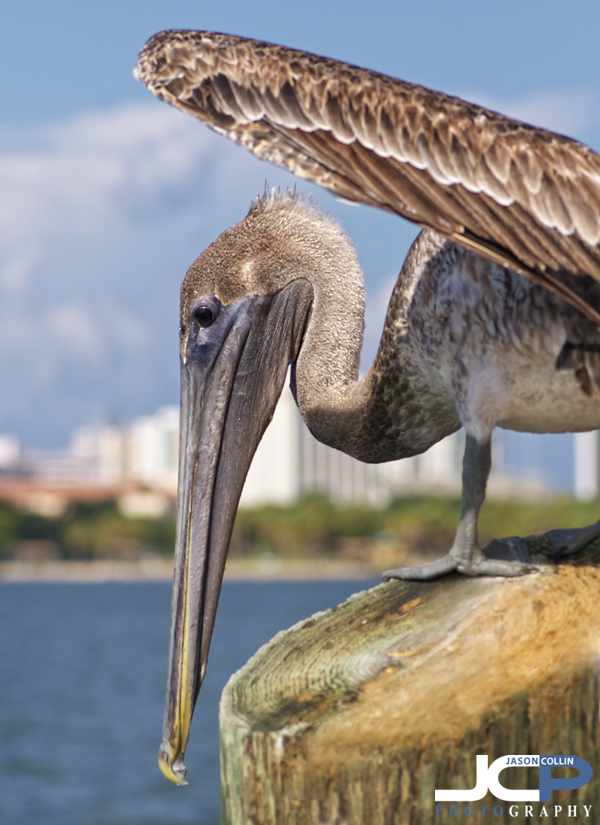
Two heads are better than one - Florida Pelican Fine Art Photography

quizzical brown pelican - Florida Fine Art Photography - Nikon D300 Nikkor AF-S 105mm VR micro f/2.8G lens @ f/5.6 ISO 200 1/160thThe many brown pelicans that make St. Petersburg home are a frequent photography subject of mine.  These birds are often very approachable, allowing one to look deep into the bird's eye, a rare human-non-human-animal close-up encounter.  I am always curious what animals are thinking.  Since they supposedly have a much different perception of time, how does this affect how they think?  If pelicans cannot think of the far future and who knows how far back their memories of past events go, what occupies their minds?  Perhaps nothing enabling them to live in a blissful present?  I often get the impression pelicans look upon humans with contempt, "go on with your life and quite gawking at me," I imagine them saying.  Are humans the only animals that feel wonder toward other animals?  Does a pelican look upon a great blue heron and think it is beautiful or merely a competitor for food?

unimpressed brown pelican - St. Petersburg Fine Art Photography - Nikon D300 Nikkor AF ED 80-200mm f/2.8D lens @ f/4 ISO 200 1/1250th


Mt. Fuji above the clouds

Mt. Fuji above the clouds as seen from the summit of Yatsugatake - blue color is natural - 200mm focal lengthMy friend i-cjw is the premiere mountain summit photographer in Japan.  He has the photography skill to produce such images, but what makes his images all the better are how rare they are because few have his mountaineering skills to get to the mountain tops he does.  His most recent photo story (view here) made me miss being around mountains even more than I already had been.  In case you did not know it, Florida is basically a pancake.  So I had to dig into my archives to find my own mountain summit images of Mt. Fuji taken from the summit of Yatsugatake.  The above photograph shows Mt. Fuji peaking just above the clouds.  It was not visible again the rest of the time I was at the summit after I made this shot, so I am glad I took out my Nikon first and sandwich second!

Mt. Fuji photographed from the same Yatsugatake summit but at a 42mm focal lengthAs you can see, Mt. Fuji was actually quite a distance away.  The lead photograph is a good example of how a 200mm lens can actually be a very good lens for landscapes.

Japanese Alps from the summit of Yatsugatake JapanThese photographs have no editing done to them other than vignetting removal (due to the not so great 18-200mm lens I had at the time) and some cropping on the above image.  The blue tones are natural.  

It is an absolutely unique feeling to stand atop a mountain summit after spending the previous hours hiking up it.  When you finally return to the base and look back up at the summit, I always do not believe my legs had just carried me up to such a high place.  I have always enjoyed a view.

These Mt. Fuji photographs are available for as fine art prints & commercial license, inquire today!

Gumbo-limbo tree of De Soto National Memorial Park Bradenton Florida

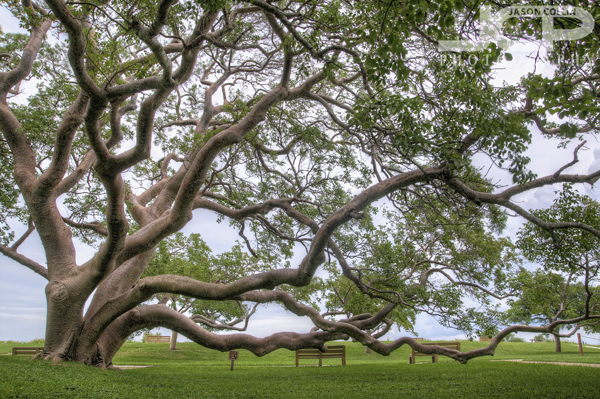
Gumbo-limbo tree largest in North America in De Soto National Memorial Bradenton Florida - Nikon D300 with Tamron 17-50mm lens @ f/8 ISO 200 7-bracket HDR on Induro CT214 tripod with cable releaseAlmost by accident visitng De Soto National Memorial on Labor Day has become an annual tradition.  When I first visited the park last year, it was an accident also as I left the house planning to visit only one park.  When that park turned out to be rather non-descript, I quickly checked the map and was blown away by how great De Soto was, as it only appears to be a very small peninsula.  Of the many impressive features of the park, perhaps the most is the Gumbo-limbo tree near the entrance, which is the largest of its kind in North America.  I intended upon my return to the park two days ago to photograph the tree properly, which required the proper gear:  tripod, cable release, wide angle lens.

The above shot was made using my Induro CT214 tripod at its shortest leg length.  I wanted to get to near eye-level of the lowest branches of the Gumbo-limbo and to show just how far the lower branches extend horizontally.  They seem to grow impossibly parallel to the ground.

Gumbo-limbo tree horizontal branches in De Soto National Memorial Bradenton Florida - Nikon D300 with Tamron 17-50mm lens @ f/8 ISO 200 7-bracket HDR on Induro CT214 tripod with cable releaseI used the exact same setup to try and create a 3D looking shot of the longest and lowest of the branches.  I do not think anyone coud actully limbo under these, and I certainly did not try!  

Gumbo-limbo tree vertical branches in De Soto National Memorial Bradenton Florida - Nikon D300 with Tamron 17-50mm lens @ f/8 ISO 200 7-bracket HDR on Induro CT214 tripod with cable releaseThe thing about the Gumbo-limbo tree is, not only does it have very long horizontal branches, but its vertical branches extend straight up high into the sky as well.  It really is an amazing tree and the crown jewel of the hidden gem that is De Soto National Memorial park.

These Gumbo-limbo photographs are available for as fine art prints, inquire today!

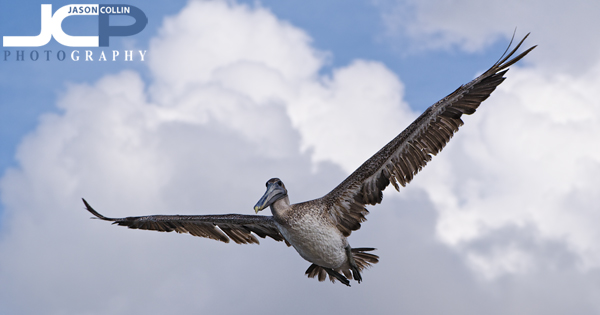
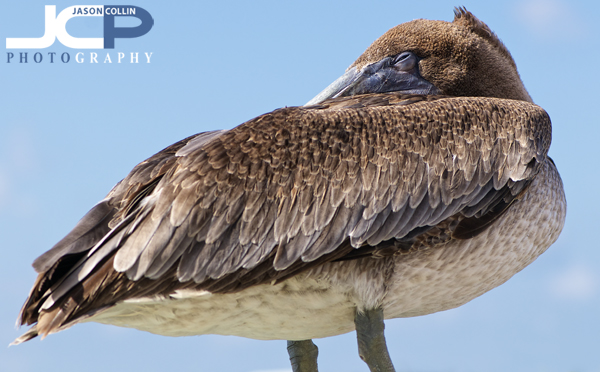
Florida Brown Pelican Fly Hunt Sleep at The Pier St. Petersburg

FLY -- Brown Pelican in flight St. Petersburg Florida -- EXIF: f/5.6 ISO 200 1/1250thRegular readers will know that I enjoy and often photograph brown pelicans.  They are not a rare bird around this part of Florida at all.  In fact, it would be rare to go to any coastal area of St. Petersburg and not see one.  However, I find myself continually drawn to photographing them despite my usual instinct being to not photograph things that are commonly photographed.  Plus, I have a bit of unfinished business as I still want to photograph a pelican in flight hovering just over the surface of the water as they are apt to do.  Catching one in flight like above requires seeing the bird approach from distance, tracking it as it swoops in, then of course have sufficient shutter speed to freeze it in mid-air.  Maybe some luck is required too?

HUNT - brown pelican looking for lunch at The Pier St. Petersburg Florida -- EXIF: f/5.6 ISO 200 1/1600thI used my Nikkor AF-S 105mm VR micro f/2.8G lens for all these shots.  It is not a very long lens but The Pier provides a very close vantage point for photographing pelicans as they fly, hunt and sleep.  To photograph these three different female brown pelicans I observed and studied their behavior.  Of course the sleeping one was not a challenge, but the flying one took a sharp eye to find and photograph and I needed to follow the hunting pelican from pier top to pier top until I could catch her while still standing at the ready.

SLEEP -- brown pelican catching a little shut eye at The Pier in St. Petersburg Florida -- EXIF: f/5.6 ISO 200 1/800thAs these photographs illustrate, brown pelicans do not all exhibit the same behavior at the same time of day.  Some flew, some hunted and many slept.  One day, I will photograph one of you skimming over the water's surface!  Until then, expect more pelican photographs of another nature.

These brown pelican photographs are available for commercial license and fine art print, inquire today!

Pelican vs. Great Blue Heron Sunset on Snell Isle Battle

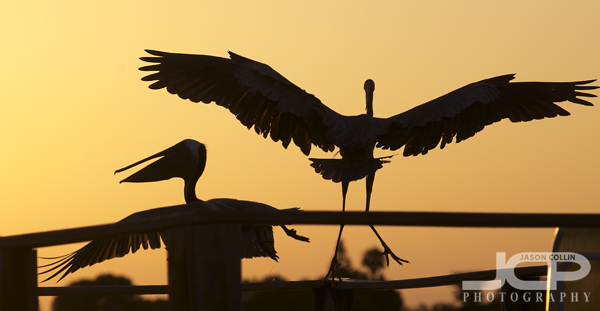
brown pelican vs great blue heron - f/5.6 ISO 200 1/1000th

Two of the largest birds in Florida are the brown pelican and the great blue heron.  They are a common site around Snell Isle.  I have seen both and photographed both many times in the past, but I never caught them in semi-battle with each other.  This particular great blue heron often likes to stand on the edge of a small dock nearby.  I see him/her on my evening walks with Kiki.  This brown pelican too likes to frequent the water around here dive bombing in for a late dinner.

Well, this time the pelican was diving too close to the great blue heron and she/he got cranky and the showdown pictured above took place.  The pelican was determined to eat, the great blue heron was determined to hold her/his ground.  In the end, the pelican moved on and the great blue heron returned to his/her usual stoic stance.   

  • Read more photo stories
  • More nature & wildlife photography
  • Photography Tip - use portrait orientation for long tall subjects like a great egret

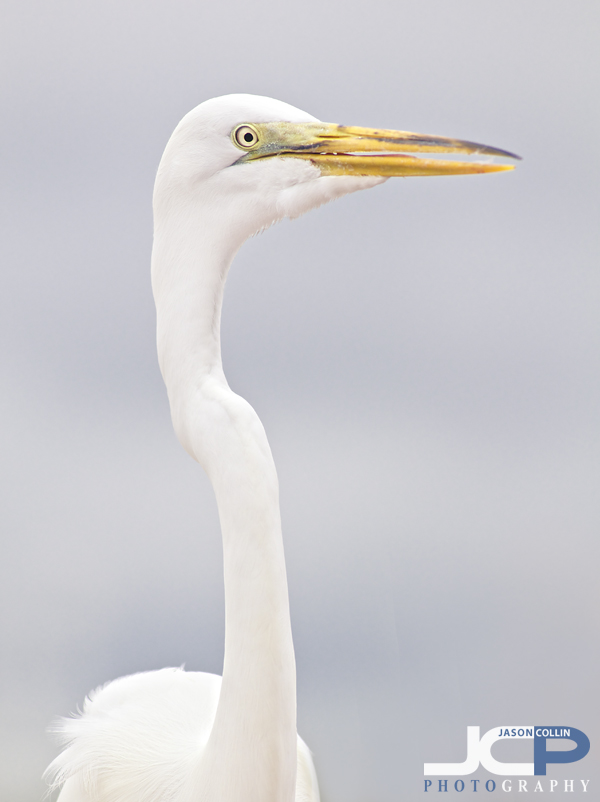
    Photography Tip - portrait orientation allows the great egret to fill the frame - The Pier, St. Petersburg, Florida

    • Setup:  Nikon D300 Nikkor 80-20mm f/2.8D @ f/4 ISO 200 1/2000th 

    Getting into a fixed routine of using landscape orientation with your DSLR is easy.  After all, the DSLR seems to be designed to be held horizontally.  However, only using landscape orientation eliminates 50%+ of composition possibilities!  Not to mention it makes it extremely awkward to photograph long, tall subjects like the above great egret.  Perhaps the best criticism I was every given about my photography was there there were not enough portrait orientation shots (thanks Jeff!).  I was told that over two years ago.  Ever since then every time I shoot I am mindful of using an appropriate amount of landscape and portrait orientation shots.  Maybe now you will be too.

    When shooting in portrait orientation, I like to hold the grip part of the DSLR up, which allows me to still wedge my left elbow into my body creating a stable shooting position.  The highest end DSLRs (i.e. $5000+) come with a vertical grip built in.  However, many other DSLRs do have vertical grip accessories available for them made by the manufacturer.  Another benefit of using a vertical grip is that it houses more batteries so you can shoot longer.  

    This great egret photograph is available for commercial license and fine art print